TL;DR
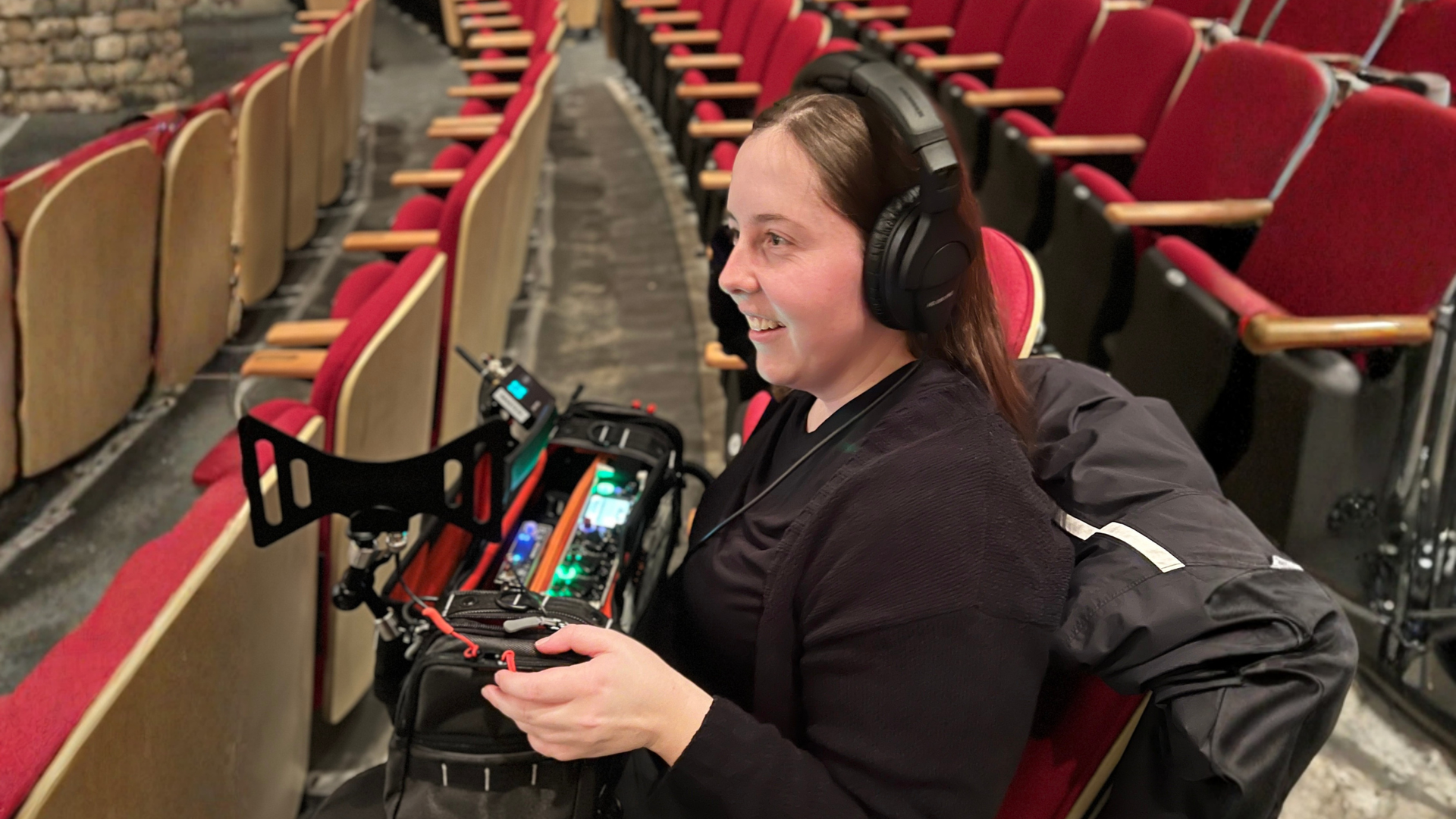
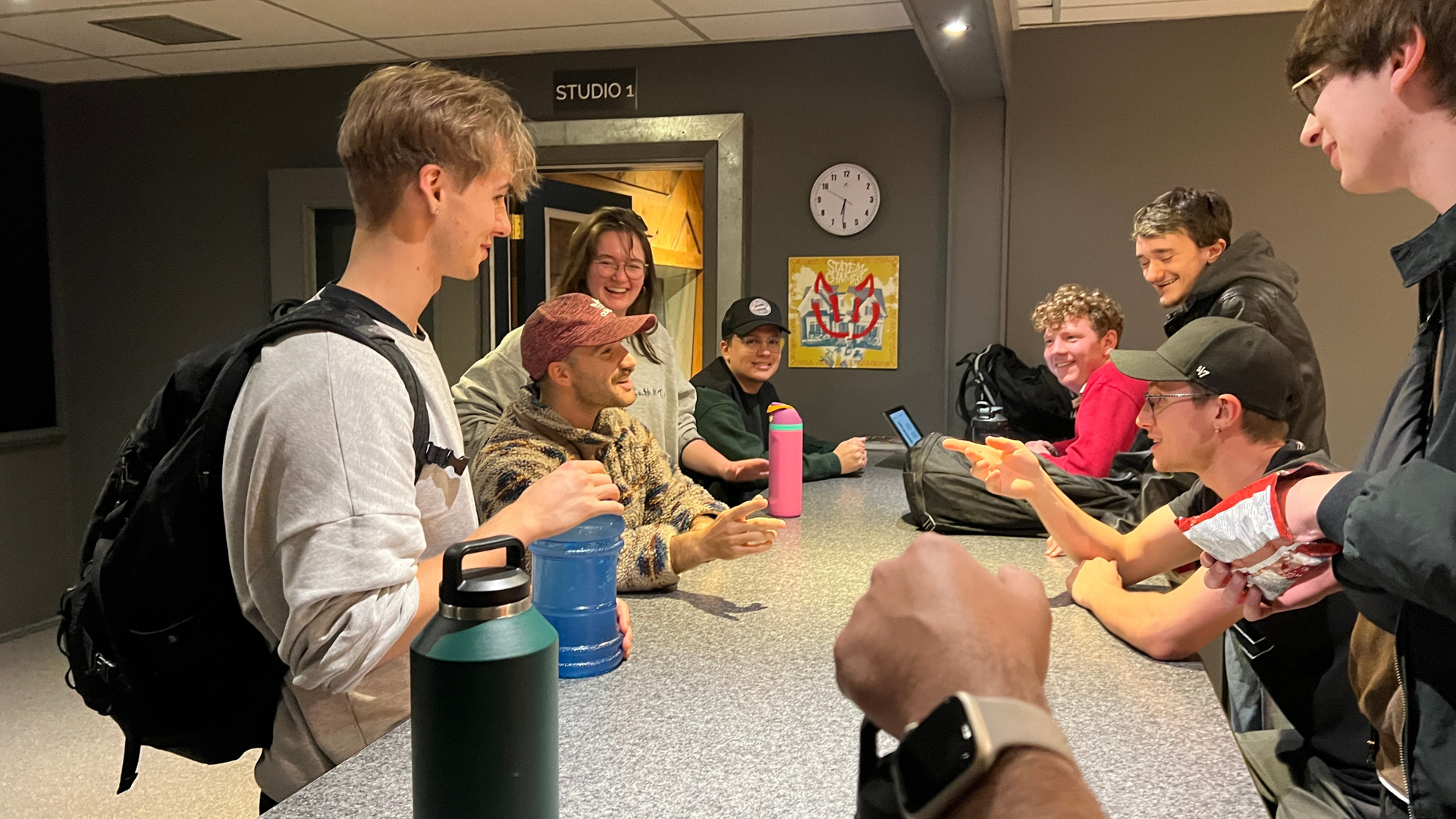
Ever wonder what a year at audio school actually feels like once you're in it? In Episode 1 of the OIART podcast, four students, Margo, Cammy, Owen and Cameron, pull back the curtain. They swap stories about the gear that humbled them (shout out to the Kensington and that first cable-wrapping lab), the moment Pro Tools finally clicked, and what it's like recording real artists with your crew. They get honest about the workload too, the kind where you can go five weeks without a day off, and why none of them would trade it. A few of them even walked in certain they wanted music, only to fall for post-production or film along the way. If you have ever pictured yourself behind the console, this is the inside look.
From skill breakthroughs to career U-turns to some genuinely reassuring advice, these quotes capture the heart of the episode.
- "Honestly, this year has been fantastic. It's been life-changing in a lot of ways. Not even just in the audio-specific sense, but in soft skills too. How I manage my time. How I actually use my time now." – Margo
- "Before coming here, I did not know what I was doing with a DAW. I was feeling around blind... now my skills, if myself in the past could meet me now, I probably would not even recognize myself with the amount of skill I have now." – Cameron
- "I came here for music very specifically. I thought my future was only going to be in that territory... as far as my career goes, it has completely flipped 180 degrees from what I expected going in."
– Owen
- "If you're a girl and you want to apply to the school and you're worried there will be no other girls there, do not be worried... It is a very safe space. You'll fit in."
– Cammy
- "The attitude the instructors take here... They want you to succeed. They have all the tools to help you succeed, and they are so eager to share them with you. It helps you have faith in yourself." – Margo
- "Two weeks go by and then you realize, 'Oh, I'm 15% faster at doing this task,' or 'I know how to edit this way now,' which I did not know how to do for years and had been trying to figure out." – Owen
If hearing these four talk about their experience made you picture yourself behind the console, come see it for yourself.
Book a campus tour to walk through the studios where this all happens, or
apply now and start your own OIART chapter.
Is Audio School Hard?
Yes, mostly because of the pace. OIART's Audio Recording Technology Program runs 11 months, and the students on the podcast described stretches of weeks without a day off. "This program is very quick and accelerated," Cameron says. "Sometimes it is five weeks and I do not have a day off," Margo adds. All four say the workload gets easier once you settle into it.
Cameron went into the trades right after high school and was out of school for about five years before enrolling. "If you've been out of school for so long, it is daunting to think, 'I'm going back to an accelerated program. Am I going to be able to keep up?'" he says. A few months in: "Now, this far into the program, I feel pretty good about it."
Margo's advice is about your time outside class: "If you're coming to OIART and you expect to be able to work at your part-time job a lot, it is not going to happen. Or it will happen, but you have to be prepared for no days off for months at a time."
Cameron puts it in perspective: "It is all stuff that we're extremely interested in, so it's not like you're hating life. It is just busy, and you get used to it, and then you're fine."
Expectations vs. Reality
Cameron expected audio school to be about the creative side of music. Instead, he found that
"the school is all about the technology. It's about using the gear, learning how to set things up, learning how to take things down, and doing it efficiently and safely."
| What Students Often Expect | What the Students Found |
|---|---|
| Mostly creative music-making | Technology first: gear, setup, teardown, signal flow |
| A flexible schedule | An accelerated pace, with weeks of no days off |
| Working alone | Crews of up to four on real sessions |
| Classmates guarding their secrets | Classmates who share mic models and placement photos |
| Falling behind without experience | Everyone up to speed within the first couple of months |
| Instructors who lecture | Instructors invested in your success |
| Knowing your career path going in | Three of the four now considering post-production |
The cohort surprised them too. "Everyone will tell you exactly what they did too," Cammy says. "But I'll ask, 'What microphone did you use?' and they'll tell me the exact model, show me a photo of how they placed the microphone."
On instructors, Margo puts it plainly: "They want you to succeed. They have all the tools to help you succeed, and they are so eager to share them with you. It helps you have faith in yourself."
Curious what a day in the studio looks like?
Book a campus tour.
Frequently Asked Questions
Is audio school hard?
The pace is the hard part. OIART's Audio Recording Technology Program fits a full audio education into 11 months, and students describe weeks with no days off, especially in the second semester. Most say it gets easier once they adjust.
Do you need experience before applying?
No audio experience is required. Applicants need a high school diploma or equivalent (admission requirements). Students arrive with very different backgrounds: Cameron had taught himself Reaper for four years, while Cammy had only used QLab. Cameron says that "in the first couple months, everybody gets up to speed in the same place."
Can you work a part-time job during audio school?
Plan for very little. Margo says most of your time, "even off campus, especially by second semester, is accounted for between projects, classes, and labs."
What does OIART teach?
Pro Tools, key commands, signal flow, patchbays, consoles, cable wrapping, soldering and crew-based recording, across music production, live sound and event production, and audio for visual media.
Have a Question? Talk to a Current Student.
The students in this episode were once in the same position you might be in right now — trying to figure out if audio school makes sense, what the Audio Recording Technology Program is really like, and whether they could actually do it.
If you want to ask someone who is currently in the program, we can connect you.
OIART Podcast Episode 1 – Transcript
Margo: Using the Kensington. Yeah. That thing, for the first two weeks, I wanted to beat up the Kensington.
Cammy: Same.
Margo: But now, I can use it no problem.
Introductions
Margo: I'm Margo. I'm in Crew 13.
Cammy: I'm Cammy, and I'm in Crew 3.
Owen: I'm Owen. I'm in Crew 14.
Cameron: I'm Cameron, and I'm in Crew 10.
Margo: Hello, and welcome to the OIART podcast.
How the year has been so far
Margo: Honestly, this year has been fantastic. It's been life-changing in a lot of ways. Not even just in the audio-specific sense, but in soft skills too. How I manage my time. How I actually use my time now. There are a lot of different things I've been taught at this school that I definitely did not have before. It's all skill sets I did not have outside of the audio skill sets, which has also been pretty incredible. I feel like I know a lot now.
Cammy: Doing a full sound edit when it felt like we had so few skills at the time was wild. I still have nightmares about how unprepared I felt for that. It is crazy to look back now and have the skills that I wish I had then, and that was only a few months ago.
Working in crews
Cameron: I personally love the crew that I'm in this semester. We are all very like-minded people. We're all working on projects that we're really stoked about. Even when you have problems, where somebody is not as strong on something, it can be hard to hold yourself back and allow them to learn on their own. That's definitely a challenge we have in our crew sometimes. Even though we have our delegated jobs, if somebody is really struggling, you want to get the session moving. You want to keep it moving for the artist. So it can be hard to hold back and say, “You can figure this out. I'll let you do this in your own time.”
Owen: Yeah. Don't be a backseat engineer.
Cameron: Exactly. Don't be a backseat engineer. It's difficult. You feel the pressure when the artist is there. Everybody wants to look good and everybody wants to do a good job.
Cammy: I feel like our crew this semester is immaculate vibes. Everybody works really hard, and everybody works really well together. Everybody wants to achieve the same end, which is to learn as much as possible all the time. But I will say, I'm grateful that we had the chance to rearrange crew members halfway through. I think that made a big impact on my year. I have nothing against the crew I was in the first time around, but it was just not the right mix for me. So that was something I was very grateful for.
Owen: I feel the exact same. Last semester, I was in a crew of two. That gets very challenging, especially in a lab where you're getting up and doing things. Then we switched, and I was in a crew of four people, and I was like, “Wait, what do you mean we're done already? What do you mean we can start recording now?” It gets very efficient, especially if you're with people you can work at least somewhat well with. Things get done, especially the longer you're in the crew for.
Cameron: I feel like now, with my crew, I'm so close with everybody, which is strange because at the start of the year I didn't know any of them. Now I feel so comfortable. I feel completely confident that everybody is going to do what they set out to do, and I do not have to worry about anybody. We get in, we coordinate with the artist, and we get the job done.
Margo: What a good feeling.
Skills they are better at now
Margo: What's something that you're way better at now than when you started?
Cameron: The most obvious answer is Pro Tools. Before coming here, I did not know what I was doing with a DAW. I was feeling around blind. I could do a couple things, but now my skills, if myself in the past could meet me now, I probably would not even recognize myself with the amount of skill I have now.
Margo: I feel the same. Did you guys use other DAWs before here?
Owen: I used Cubase before coming here.
Cameron: I used Reaper for four years, but I was trying to teach myself. The biggest thing I would say I've improved at is key commands. I was just using the mouse everywhere before. Key commands have sped things up significantly.
Margo: Yeah, key commands are so important.
Cammy: Key commands are so efficient. Everything goes by so much quicker.
Owen: We could not do what we have to get done if we did not know all the key commands. It would be a disaster.
Cammy: I really struggled with that, because the only DAW I had used before coming here was QLab, which is like, you do not make music on QLab. You click play on QLab. For me, that was a big struggle. But now I do not really struggle at all on Pro Tools, unless it is a new concept that we're doing for the first time. After that, I'm fine.
Margo: The other thing is cable wrapping.
Everyone: Yeah.
Margo: That first cable wrapping lab.
Cameron: It seems so confusing.
Margo: I had no idea wrapping a cable could be so difficult.
Cammy: But now it's second nature.
Getting comfortable with the cohort
Margo: At the beginning, I kept to myself for sure. I was so intimidated by everybody. Our cohort is impressive. Everyone seems like a very cool bunch of people, and a bunch of people who know exactly what they want to get out of this program. So it was intimidating. That was something I had to get over. It was not serving me.
Cameron: It was very similar for me too. Moving here was my first time ever living away from home. Trying to manage that, as well as meeting 50-some-odd people and trying to have genuine connections with all those people, has been difficult. But now I feel like I'm pretty good at it. There is nobody really in the course that I have not talked to a ton. I know everybody by first name. You can talk to people in passing and it's never really awkward. Our whole class this year is great. Everybody is interesting and has their own unique skills. You can learn something from everybody.
Owen: I definitely have to echo the same things. I did go to university before, and I moved out and all that, so that part was not as big of a jump for me, but moving away definitely was. I'm from Vancouver and moved all the way over here. Getting to know a whole group of people, even though we all have an obvious thing to talk about because we're all at audio school, is still a lot of people and a lot of personalities to figure out. But it has been great so far.
Favourite labs and moments
Margo: Best so far? Whole year?
Cammy: Gaggio box was good.
Margo: Gaggio was great.
Cammy: You invaded our Gaggio lab.
Margo: That was fun.
Cammy: It was really fun. It's just a little, not even a play, just two lines that our teacher wrote about how a coffee machine saved his life. Then we get to reenact it, and we get to boom for the first time, and we run it as if it were a production. It's actually so cool the first time you do it. I got to do it twice, which was really awesome. Ten out of ten experience. Would recommend.
Owen: When I first came to OIART, that was not the part I was really interested in. I'm much more into post and the computer side, the DAWs. But getting to handle the boom and getting to be part of that mini production was really exciting.
Margo: I really enjoyed the DI box build. That was a lot of fun, getting my hands on it and actually building something that I can then use. We've already been using our own DIs in recording lab, so it's cool to have something that we built. Each studio has two normalized to them, but now we have more available to us. It's cool that we built them.
Cammy: And yours still works.
Margo: Still works. Still working. It's all good.
Cammy: Soldering is so fun.
Owen: It is fun.
Cameron: No major injuries yet, at least.
Margo: Has anyone gone to the hospital from soldering?
Cammy: I have burned myself, but not that badly.
Being surprised by different parts of audio
Cameron: I came here for music production. That was my goal going into it. But there are so many jobs in the AV world, especially entry-level jobs, that I had no idea even existed. So many of them are just cool. There are so many things I did not think about that are audio-related or audio-technology-related that I'm now being exposed to. Now I'm not even sure I want to go into production. I'm on the fence between production, post-production, and working on a film set.
Margo: I feel the exact same. The worlds overlap so much. The other day in class, MV said something about how editing music can get you into music supervision, which is something I never would have thought OIART could lead you to. That is a dream job for me. So that has me rethinking my whole life because I came here for music too. It's crazy, the things you do not expect. This place is full of the unexpected.
Cammy: I came here for LSEP, actually. I always thought I would end up working in film or theatre, and I was dreading production. Not because I do not like music. I've played instruments and all that. But I was like, “I really do not want to do it.” Now I get so excited when we get to do recording labs. Truly, I love it so much.
Everyone: The recording labs are great.
Recording projects
Cameron: This semester we've been recording for Louis Soul. We've done two songs for them that we're currently working on. It has been a great experience. Every experience recording with an artist is good because so many artists are different in the way they are organized, the way they perform, or their specific techniques that they wish to have in sessions.
Cameron: In Crew 10, we've learned a lot from Louis Soul, especially with how professional they are. After our first session, we were like, “We really have to step this up, because these guys are for real.” We have to make sure we're giving them a good performance on the technical side so that they can give a good performance on the artist side. Overall, it has been going really well. We've implemented a lot of techniques we've used in class. We're recording cool instruments, like saxophone, on a bunch of our songs, which has been awesome to see. Being part of the magic of making somebody else's artistic vision a reality is such a cool feeling.
Owen: In Crew 14, we've been working with this guy, Ken the Zen. He worked with a crew last term, and it's been really fun. He was not fully prepared. He did not have demos ready or anything ready beforehand. This was more spur of the moment, like, “Hey, do you have some songs?” and he was in. He has been writing as we're recording. He comes in and says, “Hey, it's bass day. Okay, I'm going to start writing the bass part in the studio.” And he's great. He writes amazing parts. But it means we do not have time to do pre-production or planning. We just show up and figure out what to do.
Owen: That has been a challenge, but it has also been the best way to learn how to adapt in real time and figure out what we need to do to get the song sounding the way he hears it. Even if he's still writing, he knows the general direction. That fluidity and flexibility is so important, because things change on a whim.
Cammy: This semester we've been recording Jamie, Dean, and Daryl. It has been so productive. Recording Jamie, he'll just do three takes and say, “That's good. We're moving on.” He's so great to work with. Even when he is not prepared, he'll say, “I'm just going to try something,” and then he does it and it's perfect. I'm like, “How did you just pull that out of nowhere?” We have not had a lot of sessions because he got sick, but he picks up the pace and we're not behind schedule at all. We only have vocals left to record. It has been great.
Margo: In Crew 13, we recorded Caleb Trio. They're an instrumental jazz trio, and they're such great musicians. We got so much done in our first session. We got lucky because our first session was the six-hour session, so we laid down so much. Even the drummer and the bassist had never recorded in a studio before, but everything was seamless. They all did such a great job.
Margo: We have had to reamp a lot, so that has been a challenge. We needed to call in Simon. We had a tutorial with him to get our plugin chain sounding the way it needed to sound, like the original guitar signal, because there was not an amp initially. It was a DI from a pedalboard. That has been a steep learning curve, but a fun learning curve for sure.
What is left on the projects
Cameron: Our next session, we're planning on doing some vocals and some guitar. We were supposed to do guitar last session, but our artist could not make it, so we ended up doing some vocals. We're going to have to finish those next session and get our guitar down. After that, it's going to be heading into the more producing side, talking with the artist and figuring out what changes we want to make.
Cameron: One song that Louis Soul is doing, “Suniss,” is more in the reggae-dub sound. We're going to try to use some production techniques Simon was talking about in class, like getting that classic dub echo sound. We'll have to communicate clearly with the artist, figure out what they want, and make some compromises with the criteria we've been given. Hopefully we'll make something really great.
Owen: With us, I think we have everything recorded, but the main thing we're dealing with right now is that Ken is a producer first. He worked in a studio for a long time, so his mindset is very much, “You guys can fix that.” So we have a lot of editing over the next week or two. So far, everything sounds cohesive. Things just are not exactly in the right places a lot of the time, so we need to nudge them gently.
Owen: Other than that, it is sounding pretty good. We need to comp our drums and probably add more effects to them, because we have a lot of effects on our guitars, but I do not believe we've added any effects to our drums yet. We recorded a full kit for the song we do not plan to fully mix, so we'll rough mix those. Then we have a bit of drums on the song we do want to mix, which will need lots of processing from what I can tell. We need to figure out exactly what we want to do with every element. We've already mixed some elements, but we have not mixed them with all the other elements yet. Once we add everything in, that's going to change a lot.
Margo: We have a lot of percussion to edit. We had a percussionist come in during our last recording session. We recorded cowbell, shaker, and a lot of accent stuff to add some flare. We have all of that to edit in our next session for both songs. That's going to be a bit of a job, but it's going to sound good.
Cammy: Soundgoodizer.
Margo: Exactly. It's the Soundgoodizer.
Cameron: Fun fact. You learn when you go here that the Soundgoodizer is not real. It's just being the engineer.
Margo: Being better at the start.
Career goals now
Cameron: I really want to do something where I can bounce around to a lot of different types of projects. I was looking into studios that do music production as well as post-production, and even doing camera work or on-set work, like filling in for boom operating or re-recording mixing. I want to do something where I have the opportunity to do something different week to week, and keep it moving, not too stagnant.
Margo: You'll have the skills.
Cameron: Yeah, absolutely. Shout out OIART.
Owen: For me, like I was saying before, I came here for music very specifically. I thought my future was only going to be in that territory. But the more I go through the course, post and AV are calling to me more and more. Obviously, I can always continue to make my own music and do those things on the side. But as far as my career goes, it has completely flipped 180 degrees from what I expected going in.
Cammy: I still definitely want to do live, but I would also love to work on a film set. Less post-production and more production, because I want to go back to Gaggio every single time. I loved that lab. Boom operating seems so fun, and being a sound assistant on set would be so fun. The good thing is, I can still do LSEP on the side. I could join a union, or work at a bar, or something like that. My options are still open. I do not really know exactly yet, but somewhere around there.
Margo: I'm like you guys. I came here for music, and it still has my heart. But it is hard to deny that I am very interested in post-production as well. The dream for me would be getting into music editing. Sometimes I think about finding a niche where I get to record music for film too, and work on that side of things. I do not know how many studios there are like that. I think that's a huge job, but it is something I think about. I'm still on the fence, I suppose.
What they thought audio school would be.
Cameron: I thought audio school would be more surrounding the creative aspects of music, when it is really not that at all. There is some creative aspect in terms of technical ability and how you actually produce things, but the school is all about the technology. It's about using the gear, learning how to set things up, learning how to take things down, and doing it efficiently and safely. The amount of technical ability and the amount of actual technology you deal with is something I personally was not expecting.
Owen: I think that's the way to go about it. When it comes to music, it is so genre-dependent and taste-dependent. The beauty is that we now have the tools to apply our taste. When we finish, we'll be able to fully apply the things we hear and want to hear, rather than being taught the “right” way to do things and being funneled down one path.
Margo: Probably the pretension around it, I guess. Most people expect all the students here to be snotty or snarky and think they know everything. For the most part, it has been the opposite. People are excited to learn. Very humble.
Cameron: Maybe there are people who come out of audio school and think they know everything. I'm sure there will probably be at least one of us from this school that ends up that way.
Cammy: I'm the one student.
Everyone: They're not in the room with us.
Margo: Everybody is willing to help each other out. There has not been anybody who is gatekeeping their project. Anybody I've asked, “Can I see what you're doing?” has been like, “Yep, absolutely. Come and please tell me what you think.”
Cammy: Everyone will tell you exactly what they did too. I was thinking people would be like, “I'm not going to tell you my secrets.” But I'll ask, “What microphone did you use?” and they'll tell me the exact model, show me a photo of how they placed the microphone, and I'm like, “You're awesome.”
Owen: The ability to nerd out with each other.
Margo: Totally. It gets you over your imposter syndrome too. You come in expecting people to maybe have a different attitude, but everyone is just so cool.
Cameron: Everyone gets brought up to speed very quickly. I remember thinking the same thing coming in. I wondered if I was going to be behind skill-wise compared to other people coming into the program. But in the first couple months, everybody gets up to speed in the same place, and it makes it much easier to communicate and share ideas.
A note for women applying
Cammy: Disclaimer. If you're out there and you're concerned, if you're a girl and you want to apply to the school and you're worried there will be no other girls there, do not be worried. We've had, what, 13 girls? And we all click very well. It is very safe. You'll fit in. Even though there are mostly guys here, there is not a single person I do not get along with at this school. I truly feel safe talking to every single person in this building. There has never been a moment where I'm weirded out or creeped out. It is a very safe space. And if you ever feel unsafe, the staff here will make sure that you do feel safe. If there are issues, there will be someone to help you deal with those, and those issues will not happen again to you.
The workload
Cameron: One of the more challenging things about this program for me was that after high school, I got into the trades and started working immediately. I was out of school for about five years before coming here. This program is very quick and accelerated. Once you're given a concept, you're given a chance to test the concept or try it out for yourself, and then it moves along. A couple weeks down the line, you might have to do that same thing again under pressure and remember what to do.
Cameron: The pacing has been the most challenging thing. It is rewarding, because the intensity has helped push me. It made me start worrying about managing my time, managing teamwork, and delegating tasks. The most challenging thing has been acclimating to the workload. Now, this far into the program, I feel pretty good about it. Obviously I'm still stressed because we have exams coming up, but I feel much more equipped now. Before I came to the school, I did not know if I could even do this. If you've been out of school for so long, it is daunting to think, “I'm going back to an accelerated program. Am I going to be able to keep up?”
Margo: To expand on that, if you're coming to OIART and you expect to be able to work at your part-time job a lot, it is not going to happen. Or it will happen, but you have to be prepared for no days off for months at a time. I say that from my personal experience. Sometimes it is five weeks and I do not have a day off. You get used to the pace, but something people should be aware of before coming here is that most of your time, even off campus, especially by second semester, is accounted for between projects, classes, and labs.
Cammy: There is always something to do, especially because we're working a lot more at home now too. I personally do not have Pro Tools, but I will go to my friend's house who does have Pro Tools and I will work on my project there.
Owen: Good way to save money.
Cameron: It's constant. You might have a Saturday where you have six hours of exams, and then realize, “Oh, I have one day of weekend,” and then you go back on Monday and it's the same thing over and over again. But if you're really passionate about this, then that's fine. What else are you going to be doing?
Margo: That's the thing. It's so much work, but it is all good. It's fun stuff. Once you acclimate to the new schedule, it's like, “I'm here. I'm in it. This is why I'm here.” You make it work eventually.
Cameron: It is all stuff that we're extremely interested in, so it's not like you're hating life. It is just busy, and you get used to it, and then you're fine.
Gear, consoles, and learning without realizing it
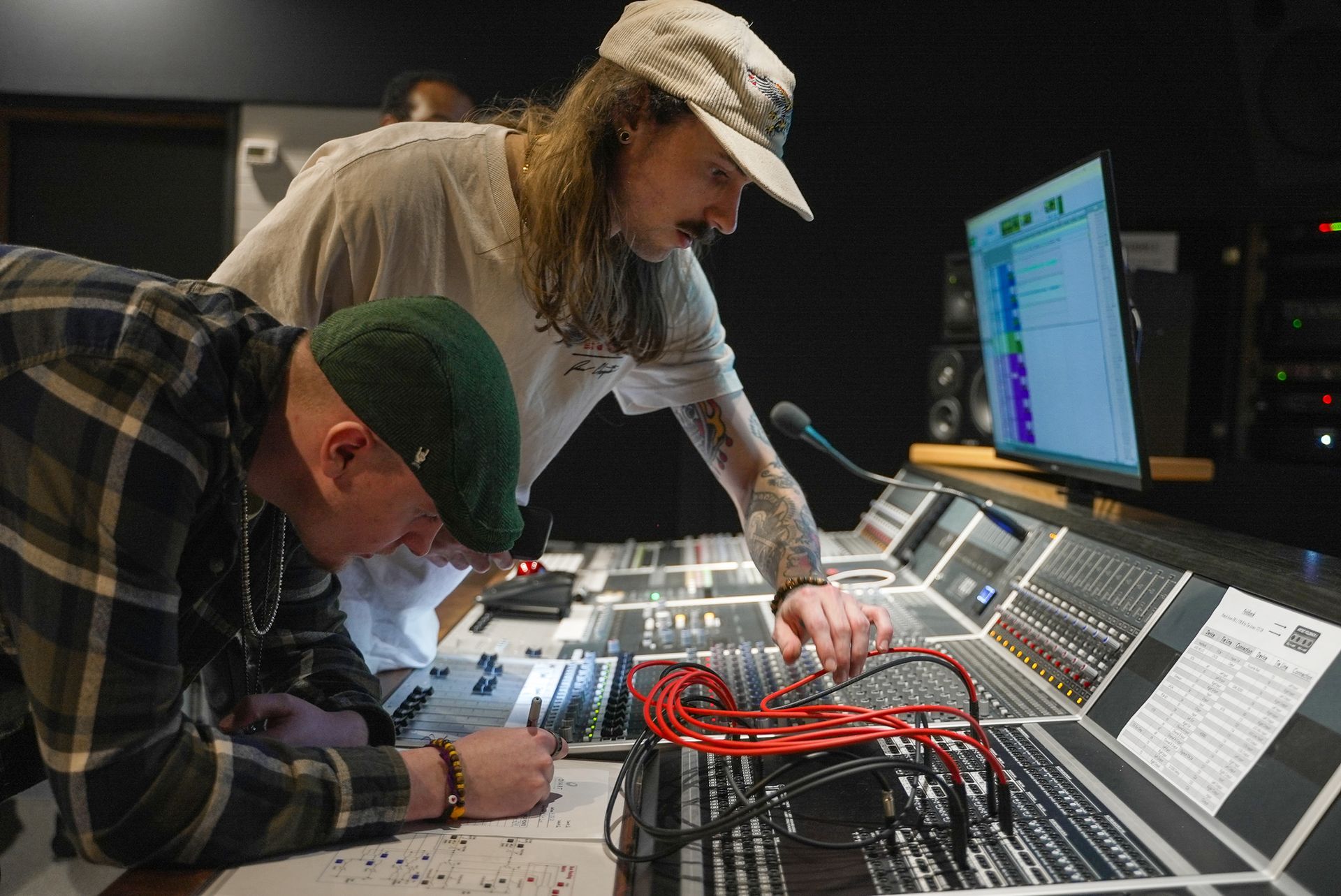
Cameron: The 8024 is such a cool piece of technology that I would never have the opportunity to use outside of the school, just based on the sheer expense of it. Getting to use a full-size console, especially in context with an actual band, making real things using the console, is rewarding. And just the fact that I know how to use everything on that console. To a layperson, it is so confusing. If you've never seen it, there are so many buttons, dials, knobs, and random stuff that it feels like there is no possible way you could understand what it all does. But now I do. You just step up to it. It's crazy to think about.
Owen: One thing I've noticed is the amount you learn without really clocking it. Two weeks go by and then you realize, “Oh, I'm 15% faster at doing this task,” or “I know how to edit this way now,” which I did not know how to do for years and had been trying to figure out.
Instructors and support
Owen: The biggest thing is the enjoyment of the teachers. They want to be here. They want to teach, and they want everyone to enjoy it as much as they do. Going to university, most professors are there because they want to study, and they have to teach. That's not why they want to be there. Here, being able to have that interaction with someone who is clearly passionate about what they're telling you makes such a huge difference.
Owen: I think that's part of why I do not always realize how much I'm learning. It does not feel like you've gone to classes and had four weeks of lectures. It feels like you've had fun and enjoyed learning something.
Margo: I studied music at university, so it was different. Our class sizes were small and we did have access to all the instructors. But for me, the biggest change coming to OIART is the attitude the instructors take toward their investment in your understanding of everything.
Margo: Classical music has a tendency to be a little elitist. It is a hard thing to do, maybe for good reason, but there is this feeling that a lot of the students are not going to be able to hack it after they graduate and take their best shot at pursuing their instrument. The attitude the instructors take here could not be more different from that. They want you to succeed. They have all the tools to help you succeed, and they are so eager to share them with you. It helps you have faith in yourself. Because they're so invested in you, you feel like you can be very invested in yourself. It gives you confidence for what's to come in a few months when we're all leaving.
Cammy: So scary to think about. We're all leaving in a few months.
Owen: It feels like we just got here.
Margo: We did. This is week four.
Dream projects and artists
Cameron: It's hard to say because I'm open to so many different types of projects. I would love to do anything from the 2010-era indie rock scene in Toronto. Somebody like Big Wreck would be really cool to work with. Honestly, I want to work with anybody.
Owen: Maybe someone like Trent Reznor or Nine Inch Nails. That would be crazy, because you get both the music side and the film side of things. That could be really cool.
Cammy: I'd love to record MJ, but that's not really an option.
Margo: Maybe an MJ impersonator.
Cammy: If I can pick anyone in the world, that's my dream. Record MJ. Or the hologram. Record a hologram. That's the dream. Or Beyonce. That's a very, very big dream.
Margo: Mine is Rosalía. She put out this album in 2025 that's in so many different languages. It's very opera-adjacent, with choirs in it. It's exquisite. I highly recommend it if you have not listened to it. That would be my dream, to work on something like that.
Skills they do better now
Margo: From the beginning of the year, what is something you look back on and think, “Man, I could do this so much better now?”
Margo: Using the Kensington.
Everyone: Yeah.
Margo: Trying to use that thing for the first two weeks, I wanted to beat up the Kensington.
Cammy: Same.
Margo: But now I can use it no problem.
Cameron: For me, it was using the patchbay. It seemed so scary at the start because there are so many places the wires can go. But once you learn the setup, I feel very confident using the patchbay now. I think back to the classes when we were first introduced to it and I was thinking, “How am I ever going to be good at using this thing? It is so complicated.”
Owen: It is easy to put something in the wrong row.
Cammy: I've done that too many times. Just one little row off.
Want to Go Deeper?
These blog posts pull out specific themes from the episode in more detail:
- 7 Reasons Why Students Are Attending OIART After High School — mirrors the students' own reasons for choosing the program.
- 10 Unexpected Careers in Audio Engineering and Music Production — ties directly to Cameron and Owen discovering AV and post-production paths they did not know existed.
- How OIART Takes You from Student to Audio Professional — the student-to-pro arc the whole episode is really about.
- Why Different Personalities Thrive in Audio Engineering and Music Production — supports the crew dynamics and cohort themes, including Cammy's note on fitting in.
- Everything You'll Learn In a Modern Audio Engineering Course — backs up the hands-on skills talk (consoles, patchbay, DI box builds, labs).
OIART's Audio Recording Technology Program Includes:
✓ Small Class Sizes
✓ On Site Facilities
✓ Industry Leading Instructors
✓ Post Grad Support & Guidance
✓ Exclusive 11 Month Program
Ready to Start?
OIART's Program Includes:
✓ Small Class Sizes
✓ On Site Facilities
✓ Industry Leading Instructors
✓ Post Grad Support & Guidance
✓ Exclusive 11 Month Program
Top Reasons Why You Should Choose OIART.
Have Questions?
If you have questions about our program for audio engineering and music production or would like to book a tour, we would be pleased to speak with you.
Text Us: 519.200.4151
Share This With a Fellow Music Lover
Apply in 3 Steps!
Step 1: Click Apply Now to start.
Step 2: Answer questions about yourself.
Step 3: Submit and check your email.
Share this with fellow music lovers