Choosing the right audio engineering school is the most critical investment you will make in your professional life. In an industry built on "who you know" and "what you can do," a diploma is only as valuable as the hands-on studio time and the alumni network that comes with it.
Whether you aim to produce Billboard-topping hits, mix cinematic soundscapes, or run front-of-house for global tours, your education must bridge the gap between "hobbyist" and "high-tier professional."
Below, we break down the top-tier institutions in North America and the specific criteria you should use to evaluate them.
Audio and Sound Engineering FAQ
Considering a career in audio engineering involves plenty of questions about the best way to proceed. So, before we explore some reputable schools to consider, let’s answer some common questions to help you hone in on the best choice for you.
What’s the Difference Between Private vs Public Audio Engineering Schools?
When comparing the top audio engineering schools in North America, one of the biggest decisions is choosing between a public college/university and a private, specialized audio school.
Recent changes in Ontario highlight why this matters. In 2026, Algonquin College suspended its Music Industry Arts cours due to funding pressures and shifting priorities. This reflects a broader reality: public institutions must balance budgets, enrollment, and government funding, meaning hands-on creative courses can be vulnerable to cuts.
For students, this raises important questions about course stability, access to up-to-date equipment, and how much hands-on experience they’ll actually get.
Public colleges often provide a more general education experience, combining audio courses with broader academic requirements. While this can be valuable, it can also mean less time developing specialized, career-ready skills.
Many Music Industry Arts–style programs cover a wide range of topics like marketing, business, media studies, and basic audio concepts all combined into one course. While this broad exposure can help, it often comes at the cost of depth. Instead of spending extensive time in studios, students may only scratch the surface of recording, mixing, and live sound. In contrast, specialized courses like OIART focus entirely on audio, allowing students to go deeper, faster, and graduate with real, hands-on experience.
Private audio engineering schools take a different approach.
Audio engineering is a specialized trade that requires focused, practical training and consistent studio access. Rather than spreading learning across multiple disciplines, these courses immerse students in real-world audio environments from day one.
That typically means:
- More time in studios, not lecture halls
- Training across music production, live sound, and audio for media
- Smaller class sizes with more instructor access
- A stronger focus on job-ready skills and industry connections
Ultimately, the right path depends on your goals. If you want a broad academic experience, a public course may be a fit. But if your goal is to build real-world skills and enter the industry faster, a specialized audio engineering school like OIART offers a more direct path.
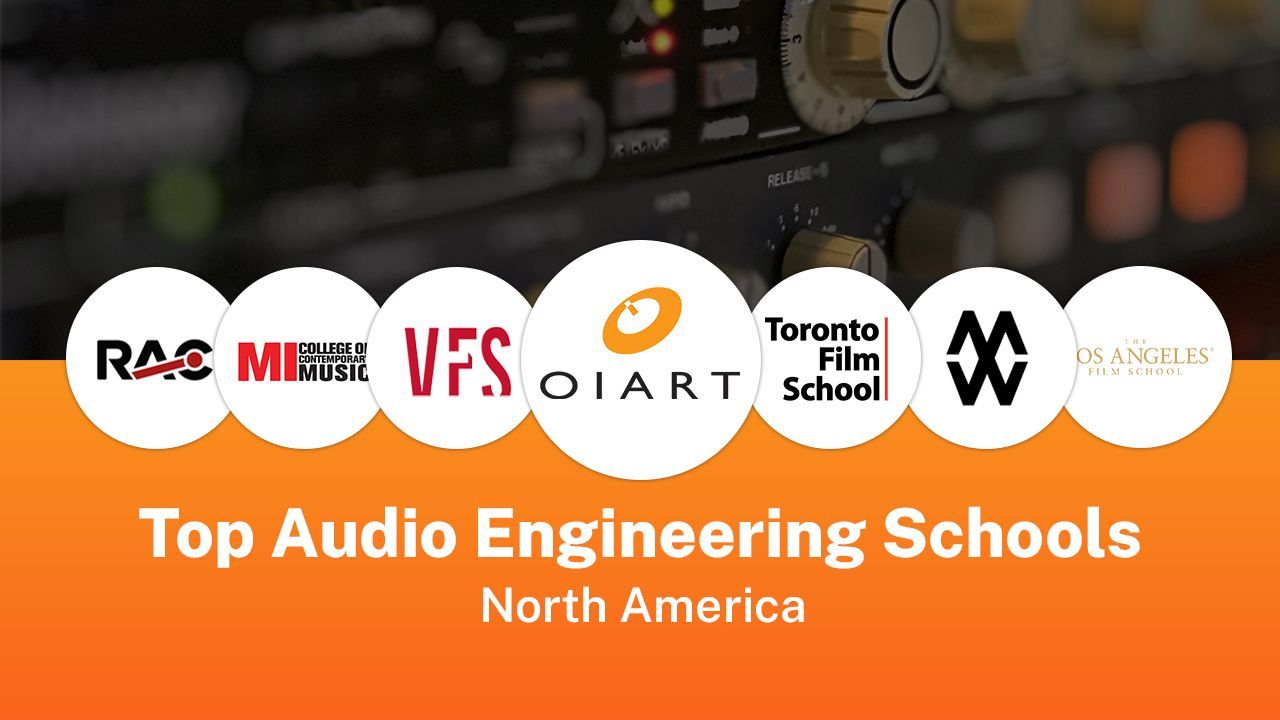
Top Music Production and Engineering Schools in North America
North America is home to some of the world’s most renowned recording institutions, but "prestige" doesn’t always translate to "employment." For aspiring audio engineers, the challenge isn't just finding a school, it's identifying which courses offers the most practical experience and the fastest path to a professional paycheck.
Whether you are looking for a four-year academic experience or a high-intensity technical immersion like the one offered at OIART, your choice should be dictated by one thing: studio clock hours.
At OIART, we believe that audio engineering is a craft best learned through doing. While many courses spread their curriculum over several years, our
11-month program is designed to get you into the workforce quickly without sacrificing the depth of your training. Below, we’ve curated a list of the most reputable audio engineering schools in North America to help you evaluate which path aligns with your career goals.
Ontario Institute of Audio Recording Technology
London, Ontario
OIART is a premier, specialized institution offering a comprehensive Audio Recording Technology program that serves as a "one-stop" destination for elite training. Unlike other schools that require you to take separate tracks, we integrate Music Production, Live Sound & Event Production, and Audio for Visual Media into a single, high-intensity course.
Our curriculum is built on a "Total Immersion" philosophy, ensuring students gain a rigorous foundational understanding of sound theory while logging massive hours in the studio.
Why Students Choose OIART Over Traditional Courses:
- Elite Studio Access: Our students graduate with a competitive edge thanks to state-of-the-art facilities featuring leading-edge technology and one-to-one access to veteran instructors.
- Intentional Class Sizes: We maintain small cohorts to ensure every student receives the mentorship needed to master the craft.
- Industry-Leading Outcomes: Beyond the classroom, we offer robust job placement assistance and provide all alumni with lifelong career support.
- Efficiency & Value: By attending OIART, you gain comprehensive experience in Location Sound, Post-Production, and Live Sound Engineering at a fraction of the cost and time required by traditional four-year college or university degrees.
At OIART, we don't just teach audio; we launch careers. Explore our
success storiesto see how our graduates are shaping the sound of the industry today.
Musicians Institute College of Contemporary Music
Los Angeles, California
MI offers a one-year certificate in audio engineering. The institute’s course covers recording techniques, recording theory, and working in audio engineering. Those interested in a focus on music engineering in the US may wish to consider this institute. The school is one of the most reputable audio engineering colleges in the United States, with several notable alumni. However, you should budget accordingly as living in Los Angeles will increase your costs significantly.
Recording Arts Canada
Montreal, Quebec and Toronto, Ontario
The sound and music production course at Recording Arts Canada is led by instructors with real-world experience, and the school has world-class facilities. Their leading course includes 900 hours of specialized training condensed into a 1-year program. This curriculum covers a range of topics used in music production, sound design, and audio engineering.

The Los Angeles Film School
Los Angeles, California
The renowned Los Angeles Film School is at the heart of Hollywood’s entertainment industry, making a strong choice for those interested in audio work in broadcast, TV, and movies. The school offers an 18-month associate of applied science of recording arts, covering a wide range of topics and practical schools to prepare for the workforce. You’ll also need to consider your budget as the cost of living in Los Angeles is high.
Toronto Film School
Toronto, Ontario
The Toronto Film School offers a diploma in sound recording, which may be a strong option for students interested in audio for film and television. The course covers a range of topics including sound design, post-production, and recording techniques within a media-focused environment. While students gain exposure to audio in film and digital content creation, those looking for more intensive training in music production or live sound engineering should consider how specialized the course is compared to dedicated audio engineering schools.
Metalworks Institute
Mississauga, Ontario
The Metalworks Institute is an extension of Metalworks Studios with various course covering music production, live sound engineering courses, audio engineering, and business management. The institute provides hands-on experience with the latest equipment and instructors with industry experience.

Vancouver Film School
Vancouver, British Columbia
The Vancouver Film School offers a diploma in sound design for visual media, which may be the perfect fit for some future students. The course provides a range of skills that focus on sound design techniques in a production environment. You won’t only focus on films, but the course also covers working in the gaming industry and producing sound mixing.
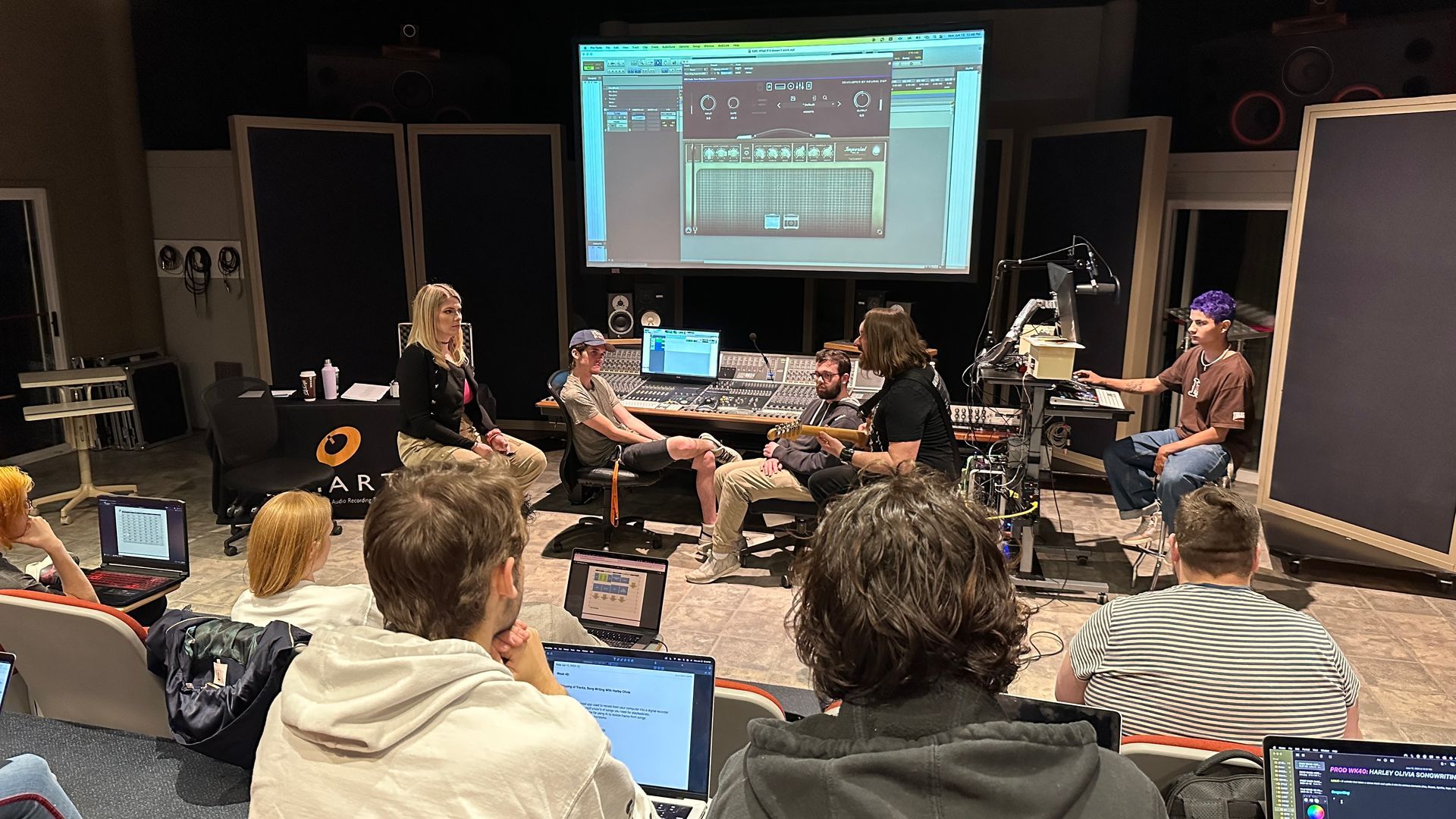
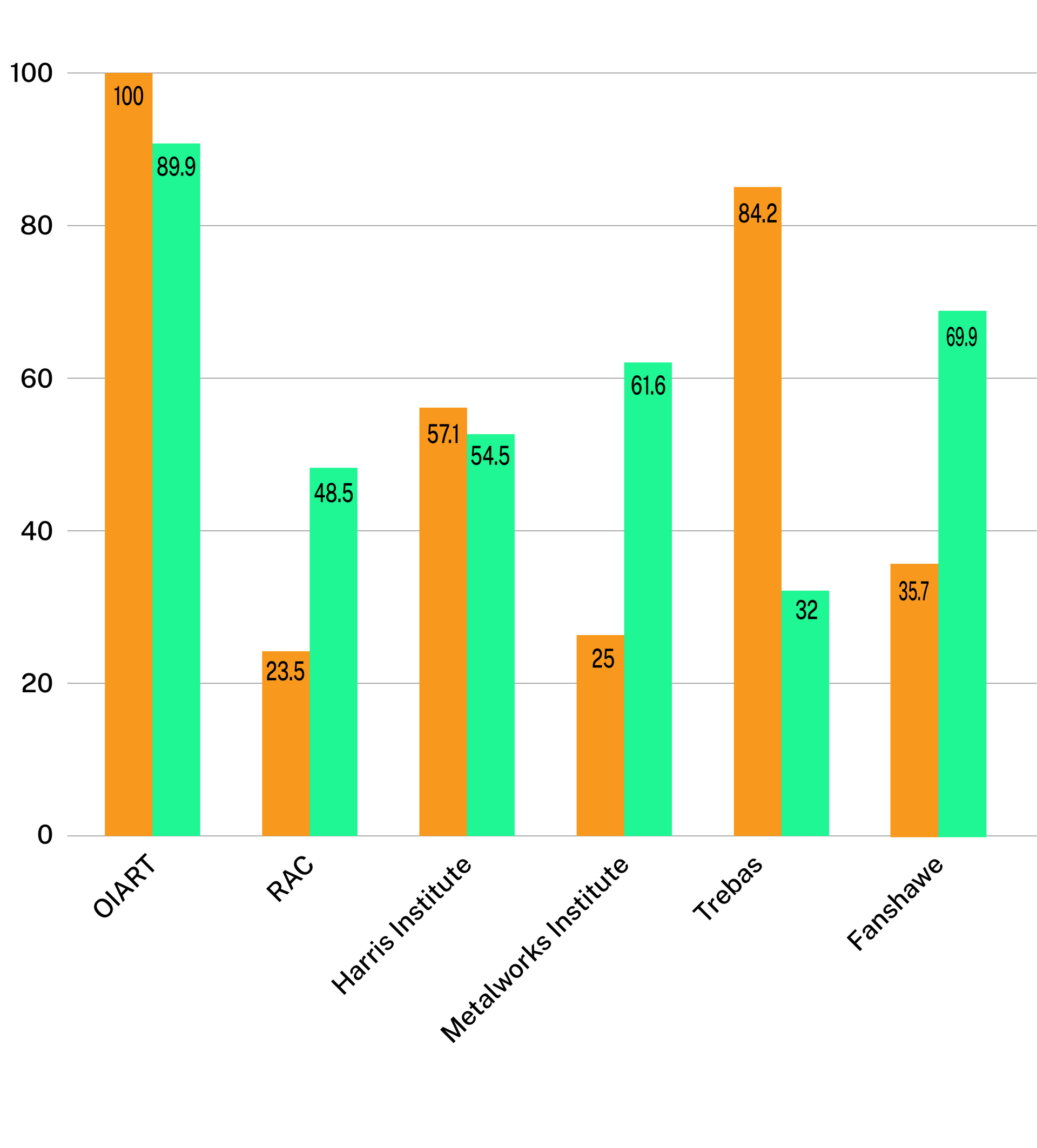
OIART has the best employment, completion, and satisfaction rates of all sound engineering schools in Ontario, Canada.*
Comparing Graduation and Employment Rates vs. Other Courses.
For our students, music isn’t just an interest or a career aspiration; it’s a lifestyle. Our true small class sizes allow us to get to know you personally and care about exactly what you want to accomplish in the industry.
This personalized approach is why so many of our graduates successfully transition into high-level roles in Music Production and Live Sound Engineering. By fostering a close-knit environment, we ensure you have the mentorship and network required to turn your passion into a sustainable, long-term career in the audio industry.
*Employment rate in field of study six months after graduation. All statements regarding courses performance such as Top, Rated the Best and #1 are based on the latest KPI survey results comparing each campus's Music Production and Recording Arts Technology program. OIART: Audio Recording Technology. RAC: Sound & Music Recording. Harris Institute: Audio Production Program. Metalworks Institute: Audio Production & Engineering. Trebas: Audio Engineering and Production/DJ Arts. Fanshawe: Music Arts Industry.
Start Your Career in Audio Engineering & Music Production with OIART
Choosing the right school is a definitive choice for your future. Success in this industry requires balancing your career goals with the right investment in your education. At OIART, we provide a fast-track, high-intensity environment designed to get you into the workforce in just 11 months.
As a leader in sound engineering in Canada, OIART combines veteran mentorship with world-class facilities. Our focus is on providing the technical mastery and professional confidence you need to launch a career in audio design or music production.
For our students, music is a lifestyle. Our small class sizes ensure personalized mentorship, helping you achieve your specific goals. This dedicated approach is why OIART graduates are among the most successful in the industry.
If you're ready to get started, a great first step is to check out our admissions requirements to see what we're looking for in our next cohort.
Once you’ve had a look, you can
apply now to lock in your spot for the upcoming intake, dive deeper into our
immersive curriculum, or
book a tour to come hang out in the studios and see exactly how we do things firsthand.
Originally published on March 29, 2024 - Updated on March 4, 2026.
Ready to Start?
OIART's Program Includes:
✓ Small Class Sizes
✓ On Site Facilities
✓ Industry Leading Instructors
✓ Post Grad Support & Guidance
✓ Exclusive 11 Month Program
Top Reasons Why You Should Choose OIART.
Have Questions?
If you have questions about our program for audio engineering and music production or would like to book a tour, we would be pleased to speak with you.
Text Us: 519.200.4151
Share This With a Fellow Music Lover
Apply in 3 Steps!
Step 1: Click Apply Now to start.
Step 2: Answer questions about yourself.
Step 3: Submit and check your email.
Share this with fellow music lovers