
Your mix sounds massive in your earbuds. Then you play it in a friend's car and the kick drum vanishes, the vocal is buried and the hi-hats could cut glass. Nothing was wrong with your ears. Your headphones were lying to you.
The best studio headphones for most people are the Sennheiser HD 490 PRO for mixing and the Beyerdynamic DT 770 Pro X for recording. On a tight budget, the Audio-Technica ATH-M40x is the pick, and it's the pair OIART students work on. The rule that matters more than any brand: closed-back to record, open-back to mix, and an honest sound beats an exciting one.
Here's how to pick the right pair, and the 10 worth your money.
Why Studio Headphones Matter
Consumer headphones are tuned to sound fun. Most boost the bass and smooth over the harsh top end so your playlist feels bigger. That's great on the bus. It's a disaster when you're making decisions about a mix.
Studio headphones aim for a neutral response. They let you hear what's actually on the track, including the mud, the sibilance and the clicky edit you missed. If your headphones hype the low end, you'll turn the bass down to compensate, and your mix will sound thin everywhere else.
That's the whole game: translation , meaning your work sounds right on every system, not just the one you made it on.
For bedroom producers, there's a bonus. A good pair takes your untreated room out of the equation, which is often a bigger accuracy problem than the speakers themselves.
Open-Back vs. Closed-Back Headphones
This is the first decision, and the job you're doing decides it.
Closed-Back: Built for Recording
Closed-back headphones seal around your ears. They block outside noise and, more importantly, keep the click track and backing mix from leaking into the microphone while someone tracks vocals or acoustic guitar. The trade-off is a narrower, more "inside your head" sound.
Open-Back: Built for Mixing
Open-back headphones have vented ear cups that let sound escape. You get a wider, more natural soundstage that behaves more like a pair of speakers, which makes panning and depth decisions easier. They leak, though, so they're useless next to a live mic and not much fun in a shared apartment.
Most working engineers end up owning one of each.
Key Features to Look For
Accuracy and Frequency Response
A spec sheet listing 5 Hz to 40 kHz tells you very little. What matters is how flat the response is across the range you actually hear. Look for independent measurements, not marketing claims, and expect every pair to have quirks you'll need to learn.
Comfort
You'll wear these for hours. Weight, clamping force and pad material matter more than most buyers think. Velour pads breathe; leatherette seals better but gets warm.
Impedance
Impedance, measured in ohms (Ω), affects how much power a pair needs. Under 100 Ω generally runs fine from a laptop or basic audio interface. Above that, like the 300 Ω Sennheiser HD 600, you'll want a stronger interface or a dedicated headphone amp.
OIART's Audio Recording Technology Program Includes:
✓ Small Class Sizes
✓ On Site Facilities
✓ Industry Leading Instructors
✓ Post Grad Support & Guidance
✓ Exclusive 11 Month Program
The 10 Best Studio Headphones, Budget to Pro
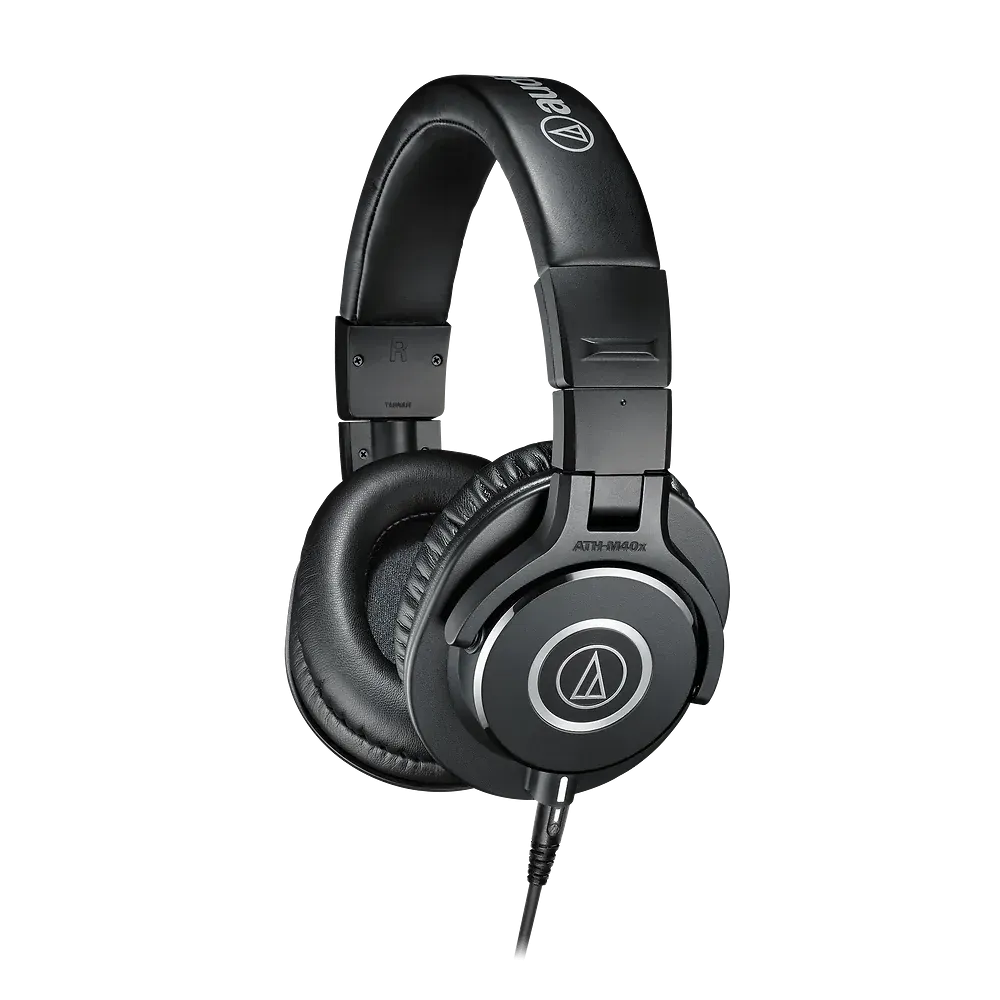
1. Audio-Technica ATH-M40x (Budget, Closed-Back)
This is the pair OIART uses with its students. It sits below the better-known ATH-M50x on price, which keeps it in true budget territory. At 35 Ω and 240 grams, it runs off a laptop and stays comfortable, and the detachable cable and swivelling ear cups are built for daily studio use.
Best for: Tracking and first mixes on a student budget, with a replaceable cable that extends its life.
Watch out for: A firm clamp and firm pads, so build in breaks, plus a boosted top end worth double-checking on other systems.
2. Sennheiser HD 280 PRO (Budget, Closed-Back)
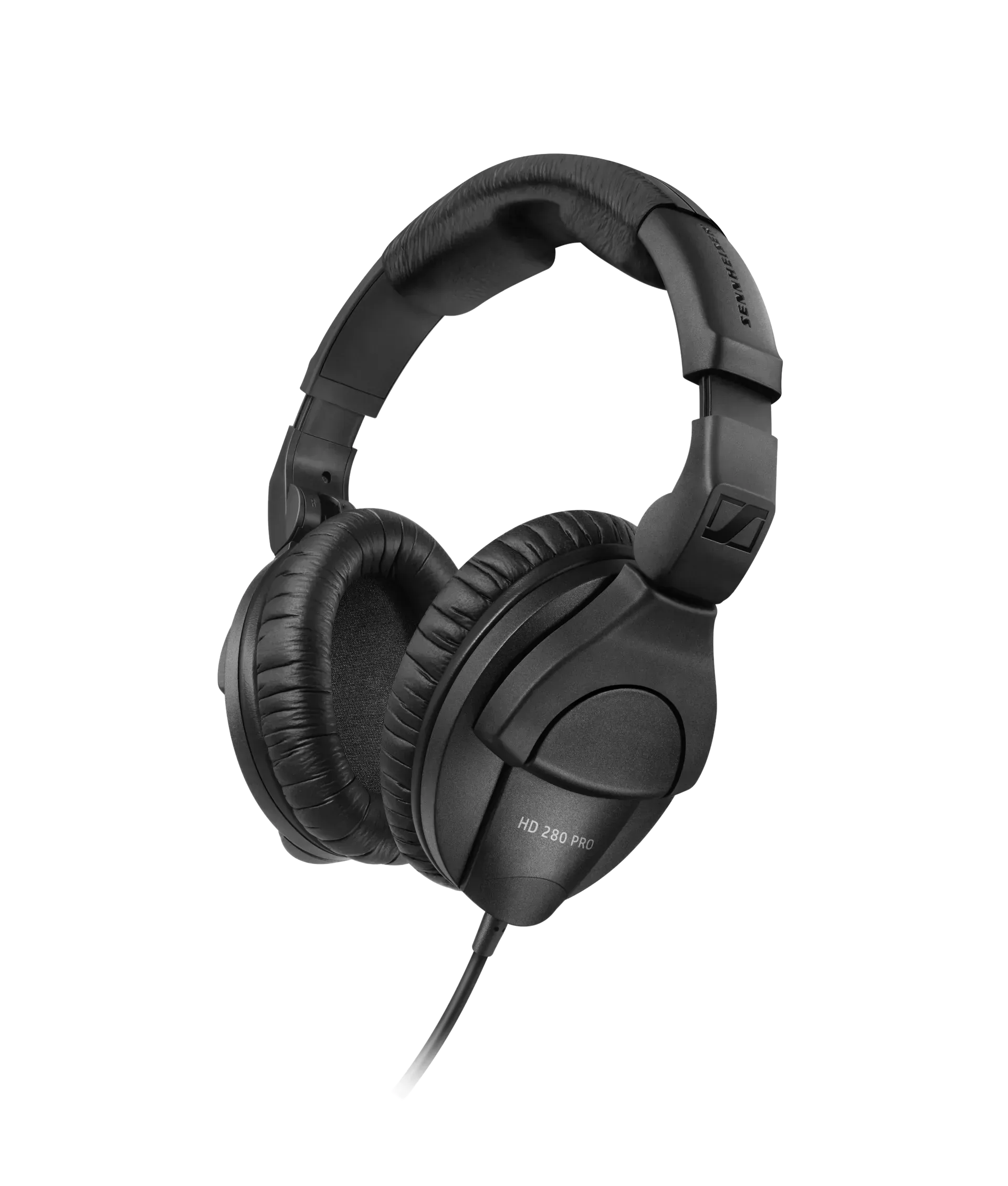
A tracking-room standard. Sennheiser rates its isolation at up to 32 dB, so the click stays out of the mic and the room noise stays out of your ears. It folds up, the ear pads are replaceable, and at 64 Ω it's easy to drive.
Best for: Tracking, with a sturdy build, strong isolation and a relatively neutral sound.
Watch out for: The tight clamp that creates that isolation gets tiring on long sessions, and the cable isn't detachable.
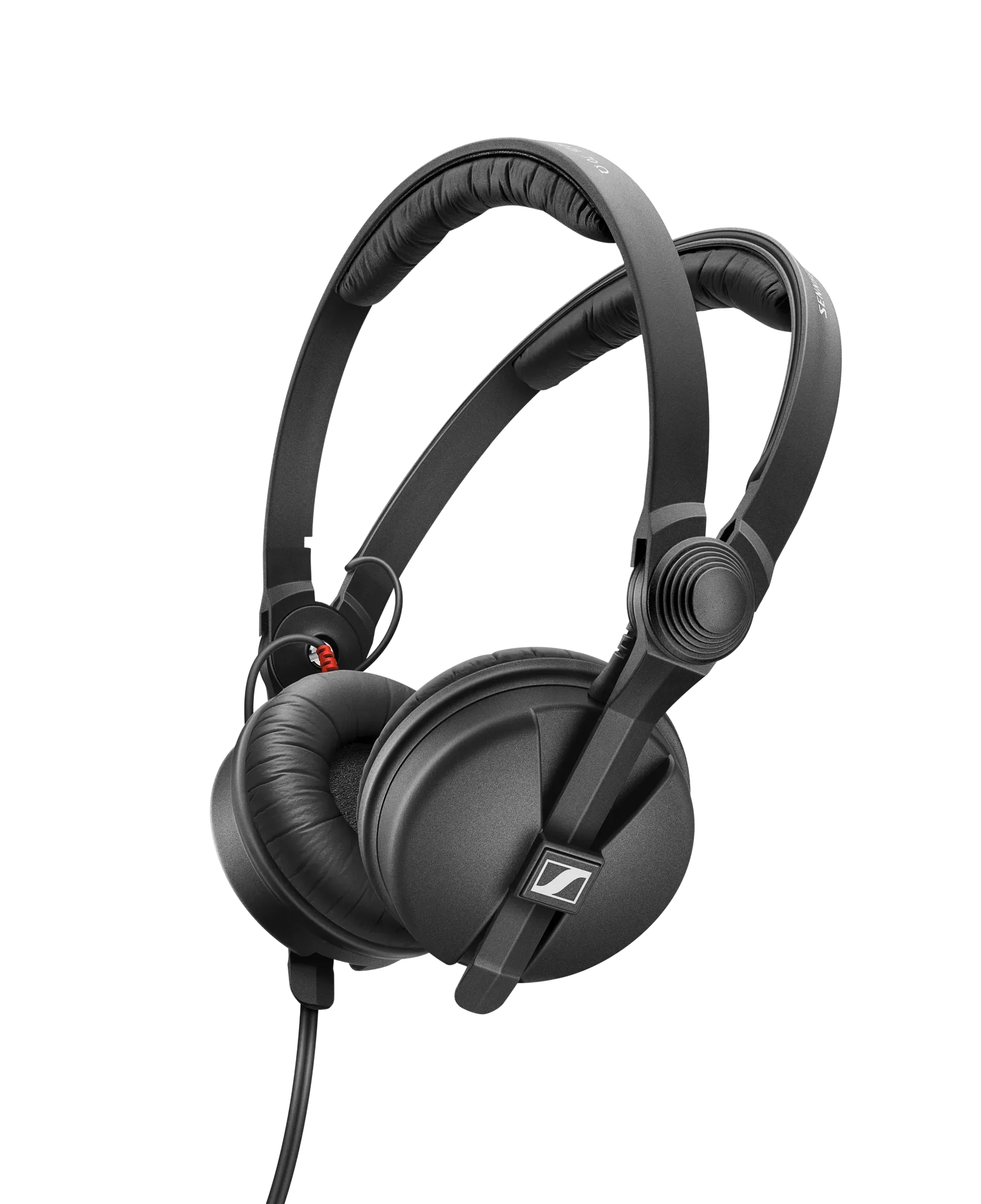
3. Sennheiser HD 25 (Budget, Closed-Back On-Ear)
An on-ear design with a split headband and rotating capsule, built for DJ booths and location sound, where you want one ear on the headphones and one on the room. It handles high sound pressure levels and has a reputation for surviving years of abuse. At 70 Ω, it's easy to drive.
Best for: DJ booths, live monitoring and location sound. It's close to indestructible, and every part can be replaced.
Watch out for: A firm on-ear clamp (tougher if you wear glasses) and boosted bass, so make final mix calls on a flatter pair.
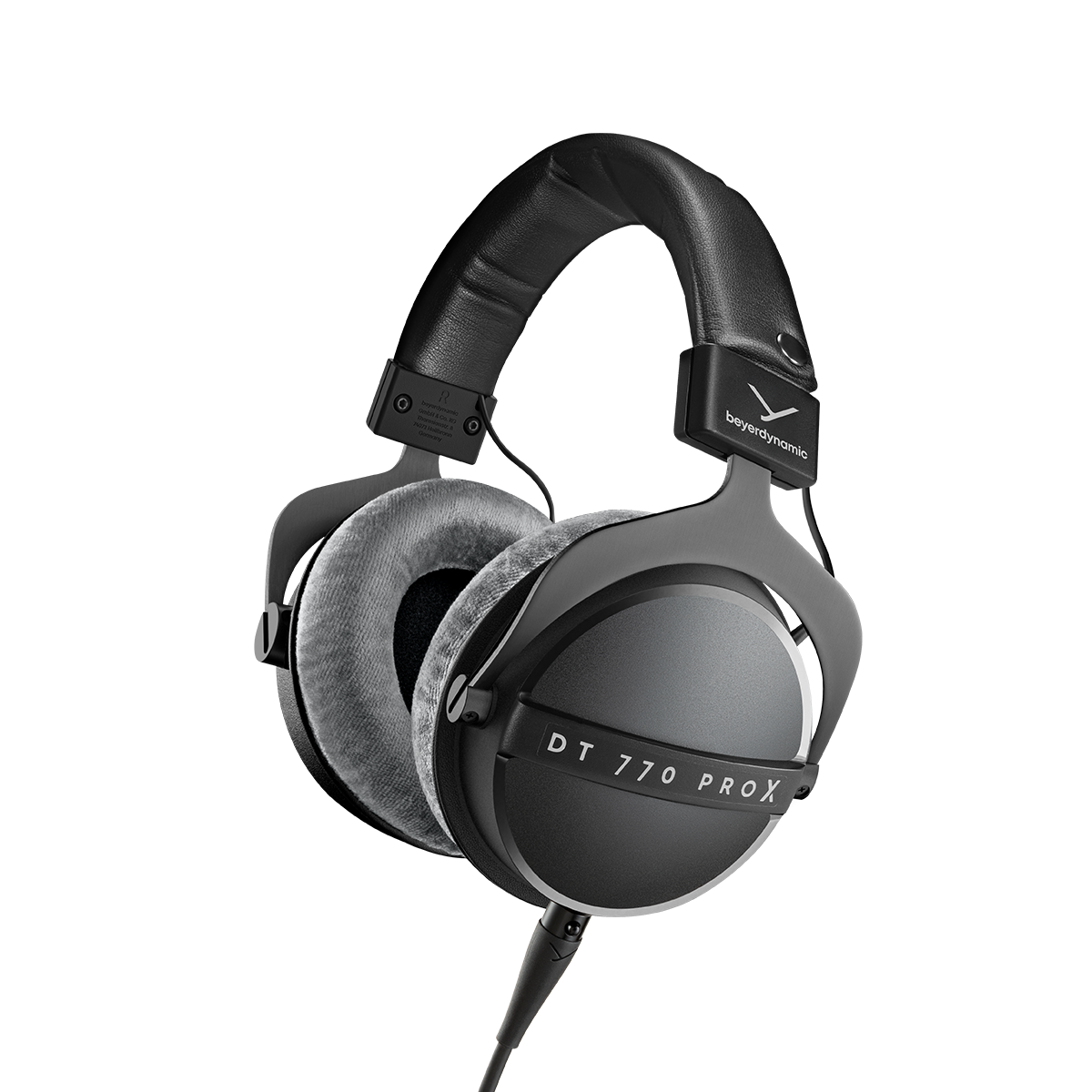
4. Beyerdynamic DT 770 Pro X (Mid-Range, Closed-Back)
An update to one of the most common tracking headphones on the planet, now with a detachable cable and a 48 Ω rating. Excellent isolation makes it the pick for vocal and drum sessions.
Best for: Vocal and instrument tracking, with comfort that holds up through long sessions.
Watch out for: The ear cups don't swivel and it doesn't fold, so it's more studio than backpack.
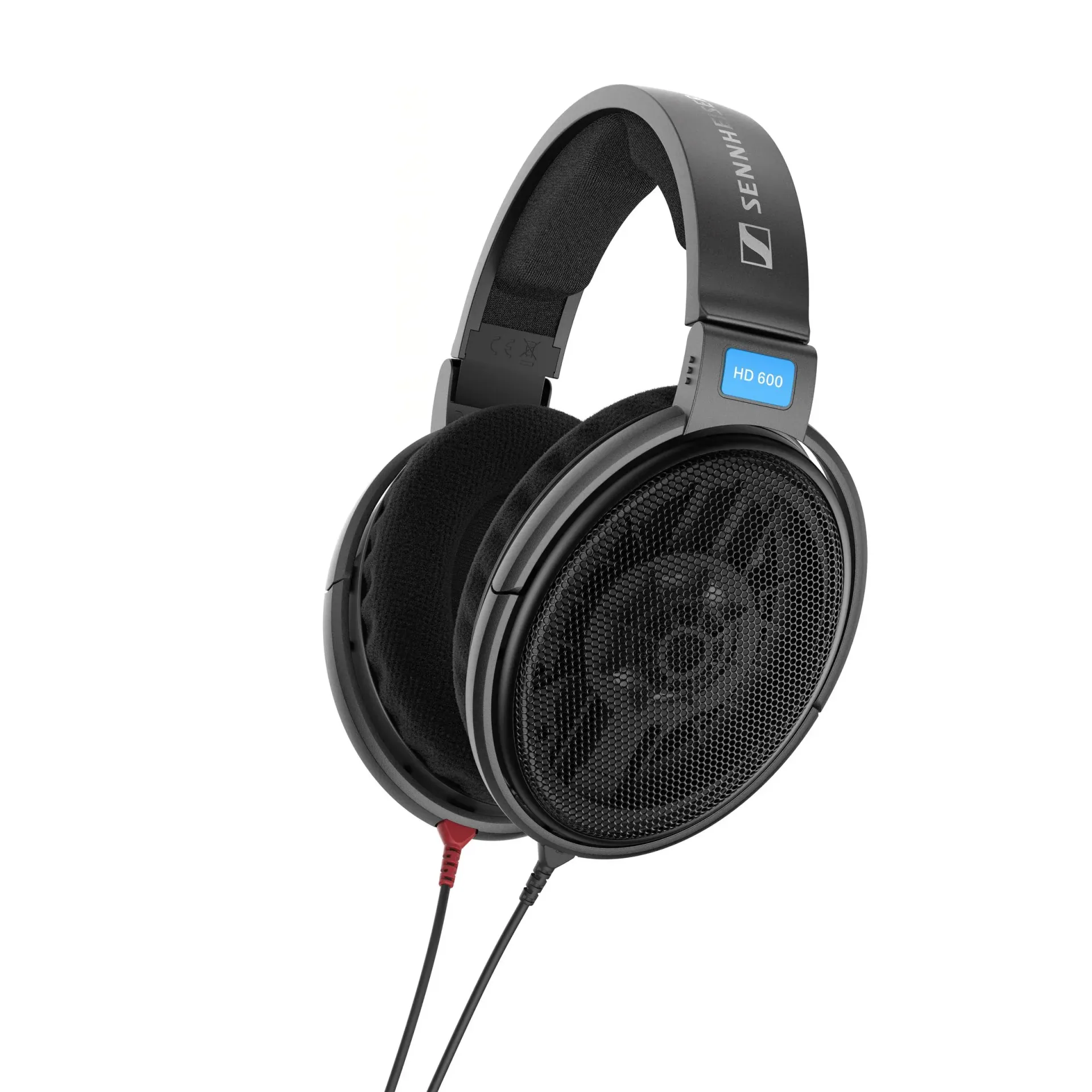
5. Sennheiser HD 600 (Mid-Range, Open-Back)
A reference standard for decades. Smooth, natural and trusted for mix decisions. At 300 Ω, give it a proper amp or a strong interface output.
Best for: Mix decisions on a reference sound engineers have trusted for decades.
Watch out for: A phone or basic laptop output won't drive it properly.
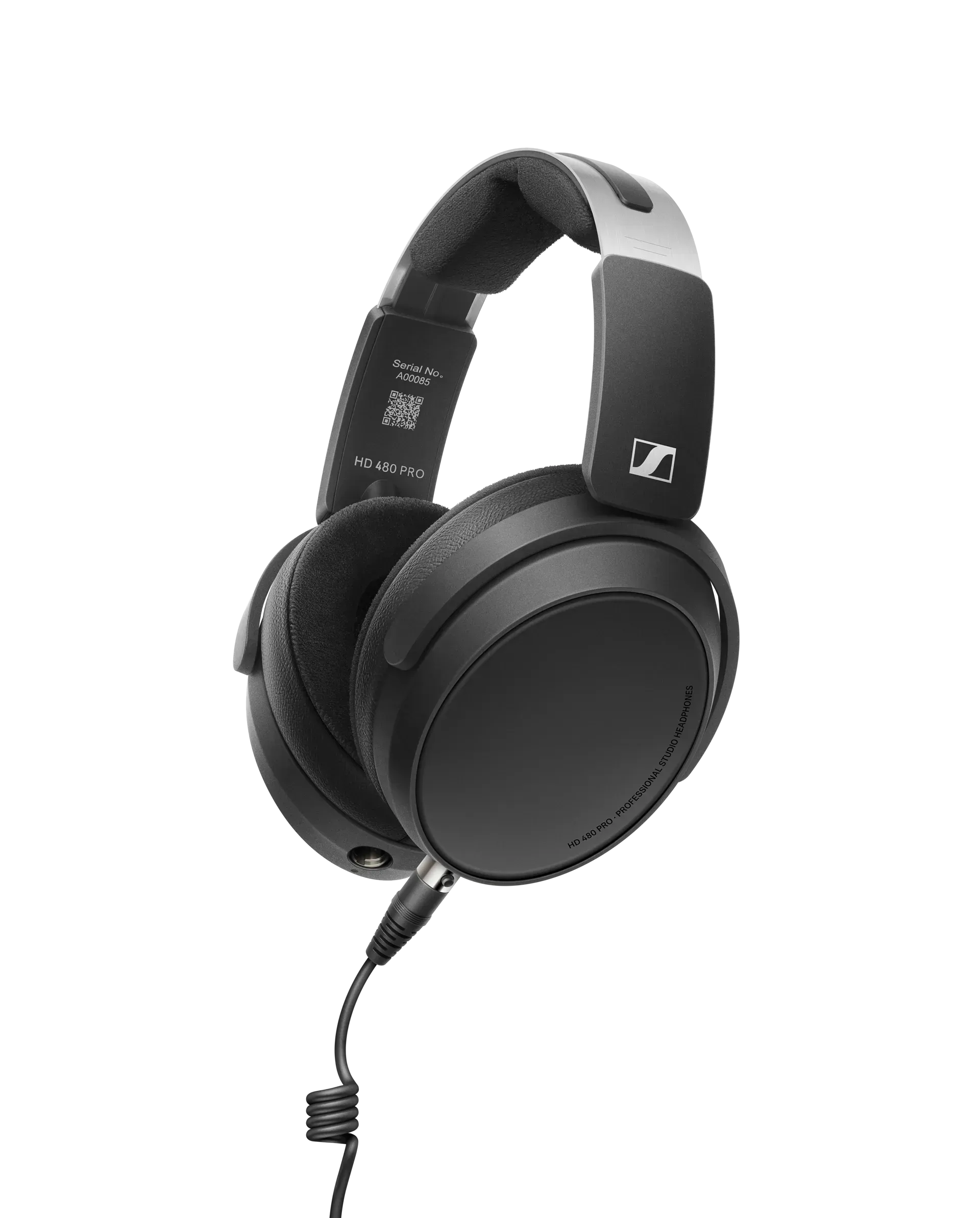
6. Sennheiser HD 480 PRO (Upper Mid-Range, Closed-Back)
Released in April 2026 as the closed-back sibling to the HD 490 PRO. Reviewers rate it as a rare closed-back you can both track and mix on, which makes it a strong one-pair solution for a home studio.
Best for: One pair that handles tracking and mixing, with HD 490 PRO-level comfort in a closed-back.
Watch out for: It costs more than most closed-backs. SoundGuys called it comfortable "in every sense but price."
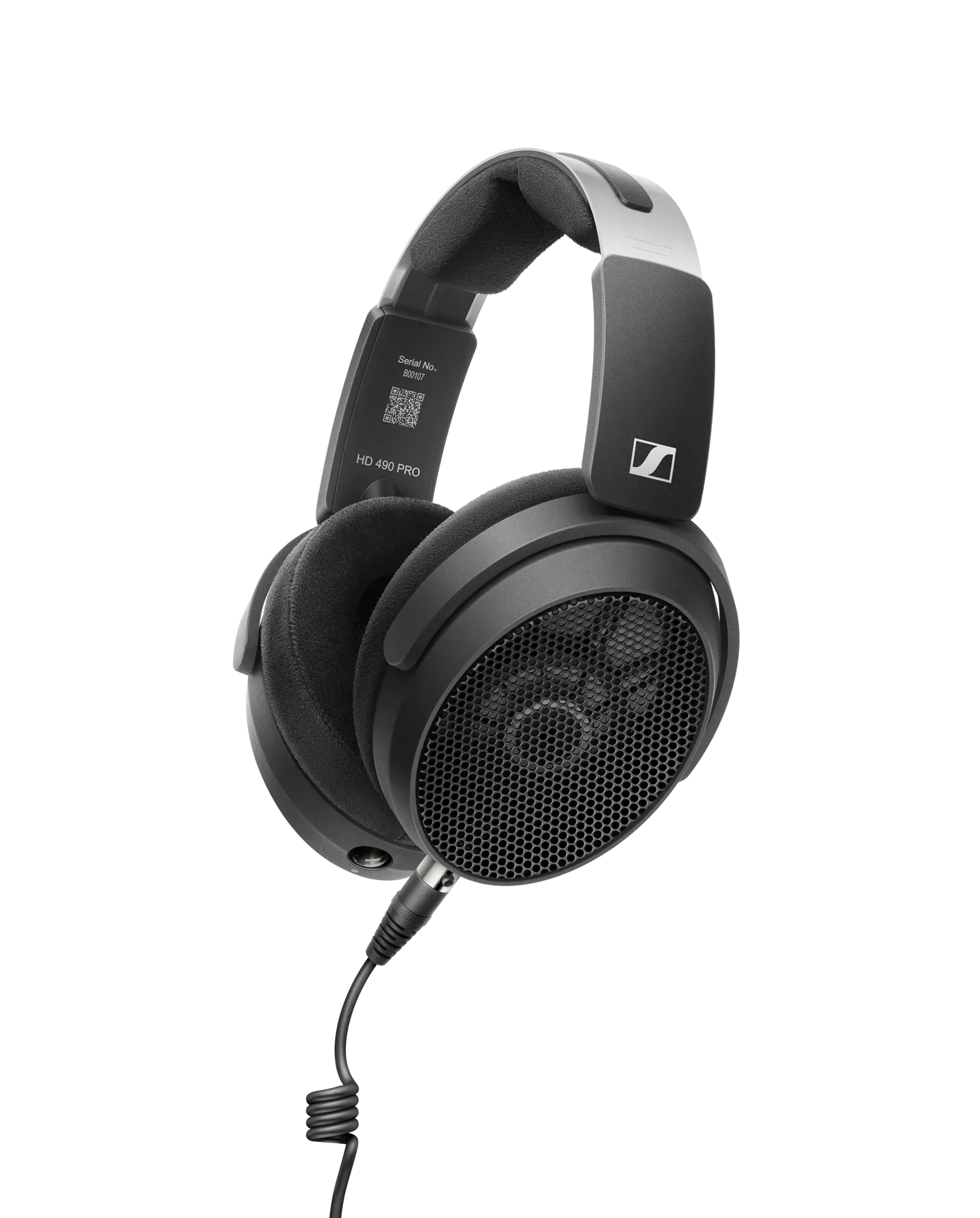
7. Sennheiser HD 490 PRO (Upper Mid-Range, Open-Back)
The current consensus mixing pick among major reviewers. It ships with two ear pad sets, one for producing and one for mixing, weighs 260 grams and stays comfortable through long sessions. At 130 Ω, it needs more power than a phone or laptop jack gives, but most modern audio interfaces drive it fine.
Best for: Mixing and mastering, with a balanced response and two pad sets for different jobs.
Watch out for: It doesn't fold small, and the carry case takes up real space.
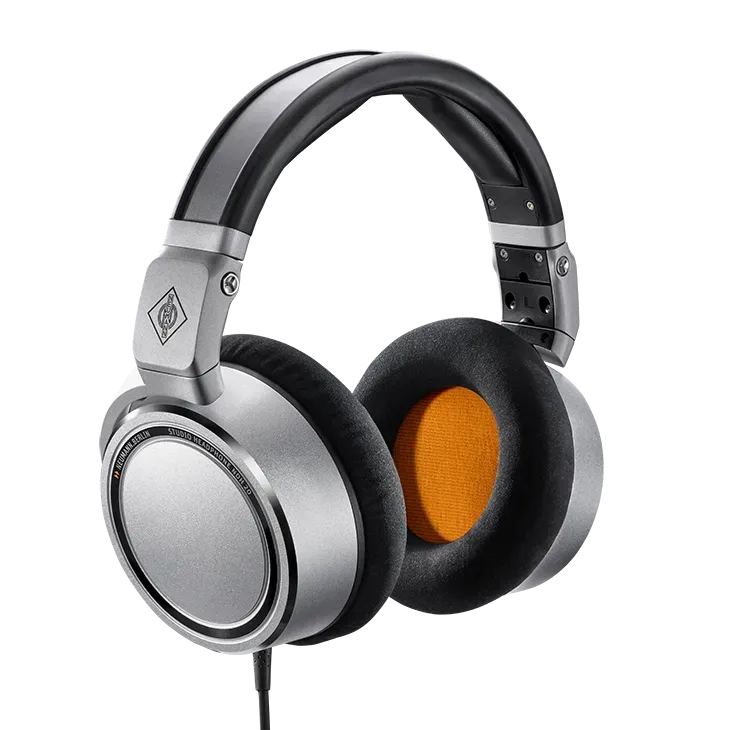
8. Neumann NDH 20 (Upper Mid-Range, Closed-Back)
Neumann's closed-back studio model, rated at more than 34 dB of isolation above 4 kHz. That makes it a strong pick for tracking in noisy rooms. At 150 Ω and 390 grams, it wants a solid interface and suits seated sessions.
Best for: Tracking and production, with a clean, low-distortion driver and a solid aluminum build.
Watch out for: Generous bass and a scooped upper midrange, so confirm mix decisions on speakers or a flatter pair.
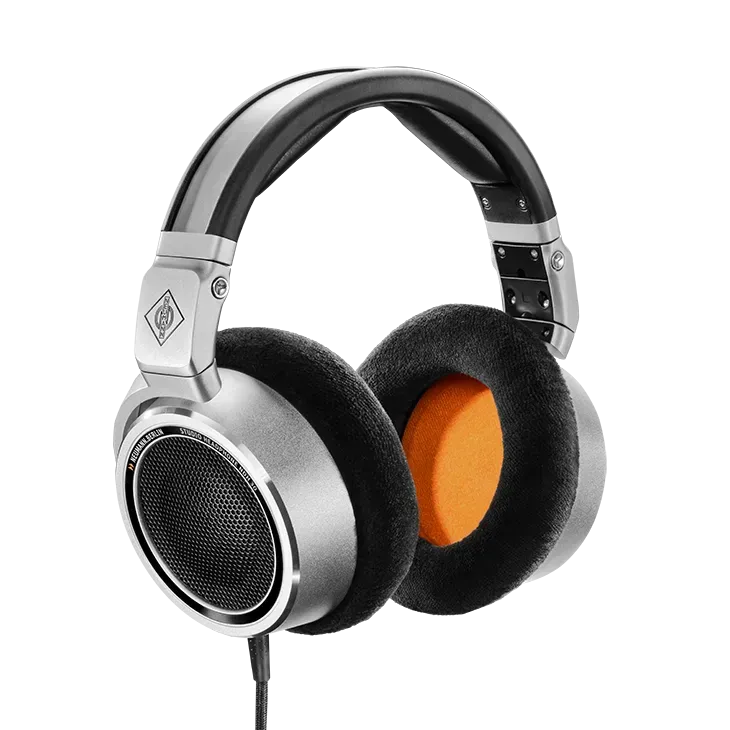
9. Neumann NDH 30 (Pro, Open-Back)
Neumann's open-back reference, tuned to match the sound of the company's KH studio monitors so your headphone and speaker mixes line up. It's 120 Ω, folds for transport and is built for mixing and mastering.
Best for: Mixing and mastering. Sonarworks rates it among the most neutral-sounding headphones on the market.
Watch out for: It's heavier than much of the competition and priced above the HD 490 PRO.
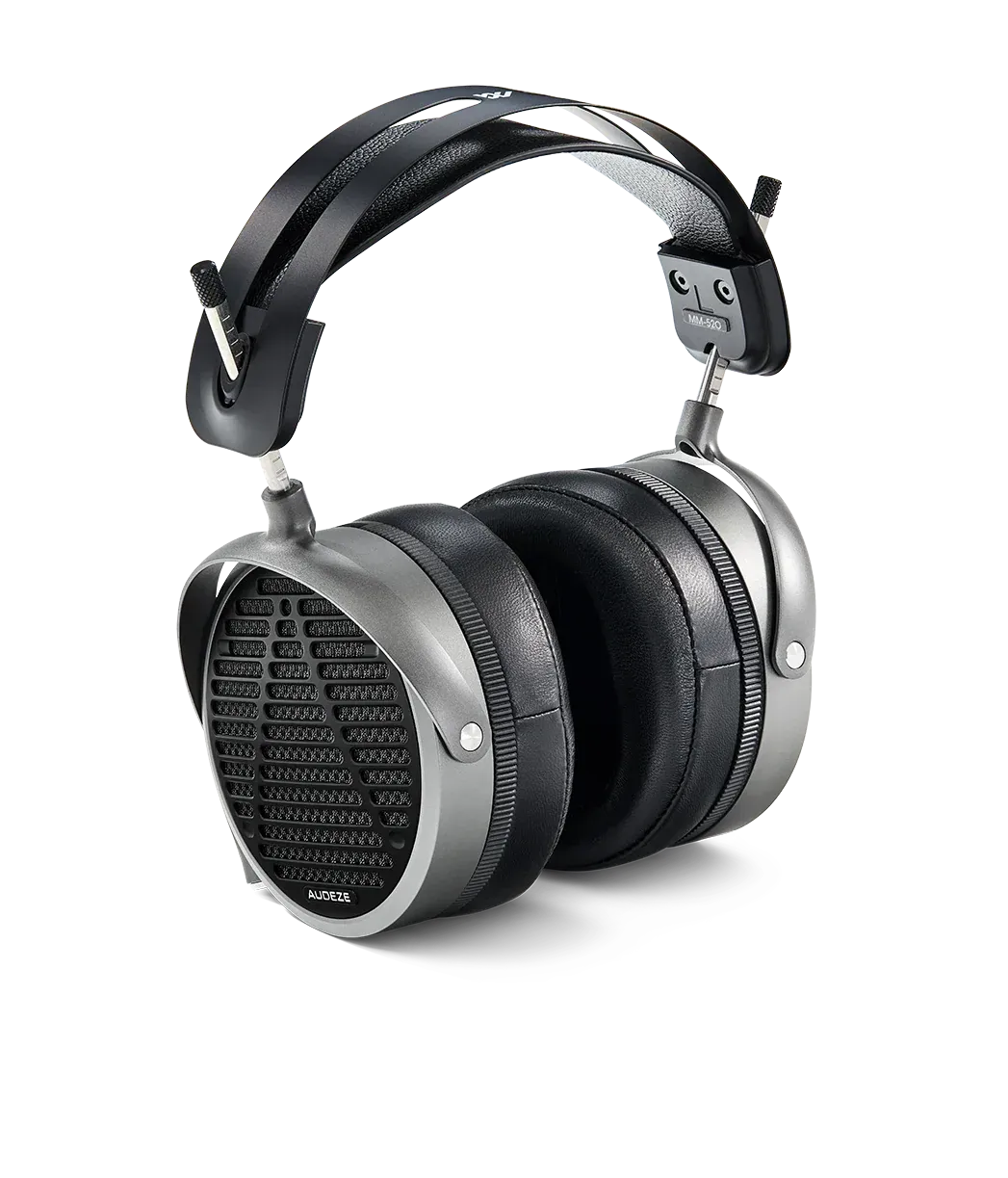
10. Audeze MM-520 (Pro, Open-Back)
The successor to the MM-500, Audeze’s mixing headphone co-designed with Grammy-winning mixer Manny Marroquin. It keeps the 90 mm planar magnetic driver and adds Audeze’s new SLAM acoustic tech, which the company says gives deeper, tighter bass and more accurate mids. The memory foam ear pads now attach magnetically, so they’re easy to swap and clean. At 18 Ω, it’s still easy to drive.
Best for: Mixing for translation, with planar detail that runs easily from any interface.
Watch out for: It’s the most expensive pair here and, at 555 grams, the heaviest.
Already own an MM-500? It’s been discontinued, but it’s still a trusted mixing reference with the same driver size and the same 18 Ω rating. There’s no need to upgrade unless you want the tighter low end and the easier ear pad swaps.
Best Picks for Music Production, Recording and Mixing
- Music production on a budget: Audio-Technica ATH-M40x or Sennheiser HD 280 PRO
- Recording and tracking: Beyerdynamic DT 770 Pro X, Sennheiser HD 480 PRO or Neumann NDH 20
- Mixing: Sennheiser HD 490 PRO or HD 600
- Mastering and critical detail: Neumann NDH 30 or Audeze MM-520
If you're focused on music and sound production at home, start with one closed-back pair. It covers tracking and early mixing, and you can add an open-back pair once you know what you're missing.
Common Buying Mistakes
- Buying for the bass. A pair that makes your 808s rumble will fool you into under-mixing the low end.
- Going wireless. Bluetooth adds compression and latency. Fine for checking a mix, wrong for building one.
- Ignoring impedance. A 300 Ω pair plugged into a phone sounds quiet and lifeless, and people blame the headphones.
- Recording with open-backs. The click track will end up on your vocal.
- Cranking the volume. Loud mixes feel better but wreck your judgment and your hearing. Take breaks.
Tips for Choosing the Right Pair
- Decide on the main job first: tracking, mixing or both.
- Match impedance to the gear you already own.
- Try a pair on if you can. Fit is personal.
- Pick one pair and learn it deeply with reference tracks you know by heart. Familiarity beats specs.
- Always check your mix on other systems: car, phone, earbuds, speakers.
A Day in the Life: Monitoring at OIART
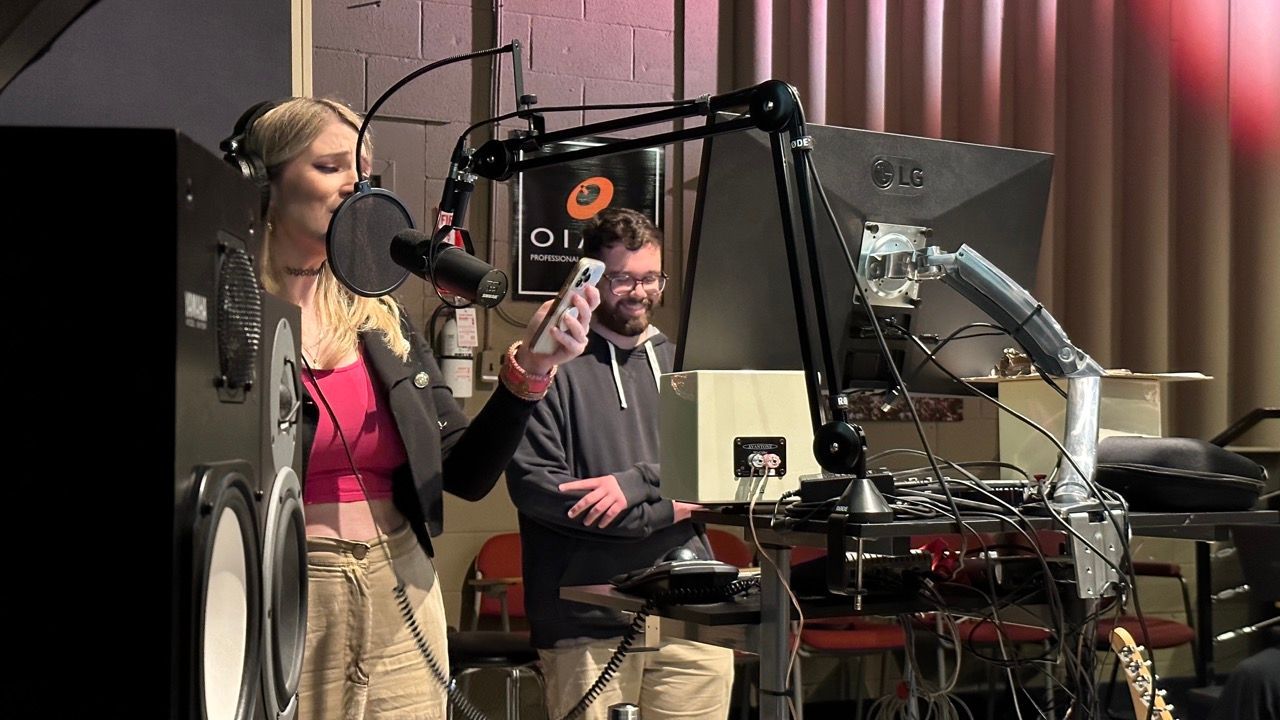
At OIART, critical listening fills the whole day. You're in a studio in week one, working in groups of no more than four students, so you're the one wearing the headphones.
A morning might start in a theatre-style classroom where individual headphone jacks let everyone hear the same playback while an instructor walks through a mix. After lunch, you could be tracking a band, setting up headphone mixes so the drummer actually hears the click. Later, in Studio 5's Foley/vocal booth, you're recording sound effects for a film project. Studio 8, built for mixing audio to picture, is also where you learn how acoustic treatment changes what you hear, using measurement tools like SMAART and REW.
Why Professional Monitoring Matters in Audio Engineering Training
Great headphones won't tell you what to listen for. Training does, and that's the idea behind OIART's Audio Recording Technology Program, an 11-month sound engineering course built around more than 650 hands-on hours in eight student-dedicated studios. You learn to trust your ears on studio monitors, headphones and everything in between, so your work translates outside the room you made it in.
If you enrol, hold off on big gear purchases. Tuition includes studio headphones, hard drives and custom-fit hearing protection, and students work with the Audio-Technica ATH-M40x for music production. OIART recommends waiting until you graduate to buy your own setup, so you'll know exactly what your career path needs instead of guessing.
That training shows up in grads like Jason Dufour, a 2007 OIART grad who worked his way up from assisting at Phase One and Revolution Recording to engineering records for Tokyo Police Club, Lights, Big Sugar and July Talk. In his words, OIART "gave me the foundational tools that I needed to build upon my skills and develop into my career as a recording engineer/mixer."
Ready to Train Your Ears?
Pick a pair from the list and start learning it. When you're ready to train your ears in a real studio, book a campus tour to see the eight studios in person, or apply now.
FAQ
Ready to Start?
OIART's Program Includes:
✓ Small Class Sizes
✓ On Site Facilities
✓ Industry Leading Instructors
✓ Post Grad Support & Guidance
✓ Exclusive 11 Month Program
Top Reasons Why You Should Choose OIART.
Have Questions?
If you have questions about our program for audio engineering and music production or would like to book a tour, we would be pleased to speak with you.
Text Us: 519.200.4151
Share This With a Fellow Music Lover
Apply in 3 Steps!
Step 1: Click Apply Now to start.
Step 2: Answer questions about yourself.
Step 3: Submit and check your email.
Share this with fellow music lovers